
Meet the three fabric families.
The fabric determines what passes through the shade, what remains visible, and how a room feels throughout the day. Start with the experience you want, then choose your color and texture.
Light Filtering
Soft daylight with an obscured view and everyday privacy.
Blackout
Opaque fabric for maximum light blocking and privacy.
Solar Screen
An open weave for glare control while preserving a view.
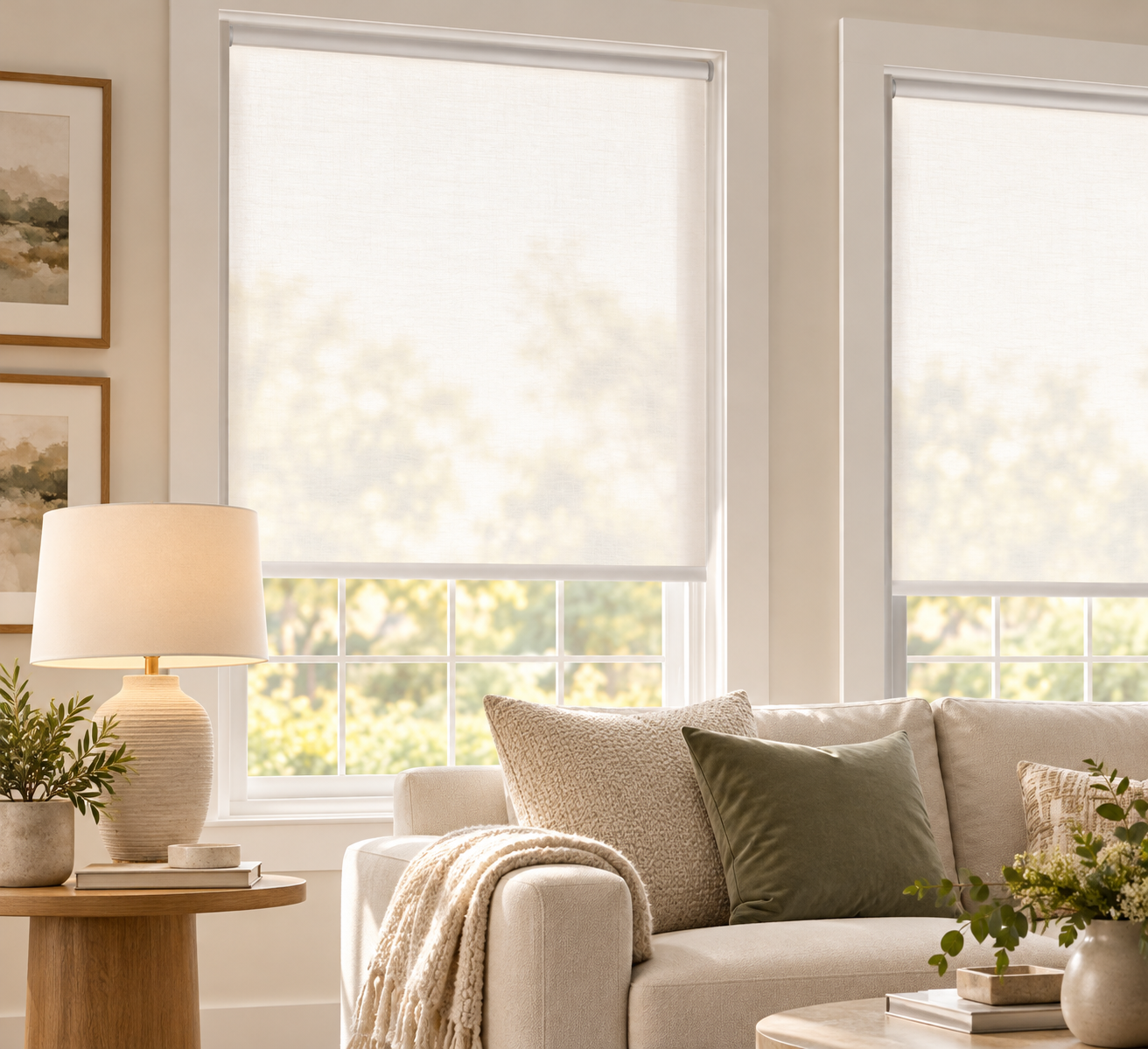
Close-up of light-filtering roller shade fabric texture
Daylight, softened.
Light Filtering roller shades gently diffuse incoming sunlight, reducing harsh brightness without making the room feel closed off. They create a warm, comfortable glow while obscuring a direct view through the window.
- Light
- Soft, diffused natural daylight.
- Privacy
- Good daytime privacy; silhouettes may be visible at night.
- Best for
- Living rooms, kitchens, dining rooms, and shared spaces.
Good to know: Lighter colors and thinner weaves can reveal silhouettes when indoor lights are on after dark. Light Filtering does not mean blackout.
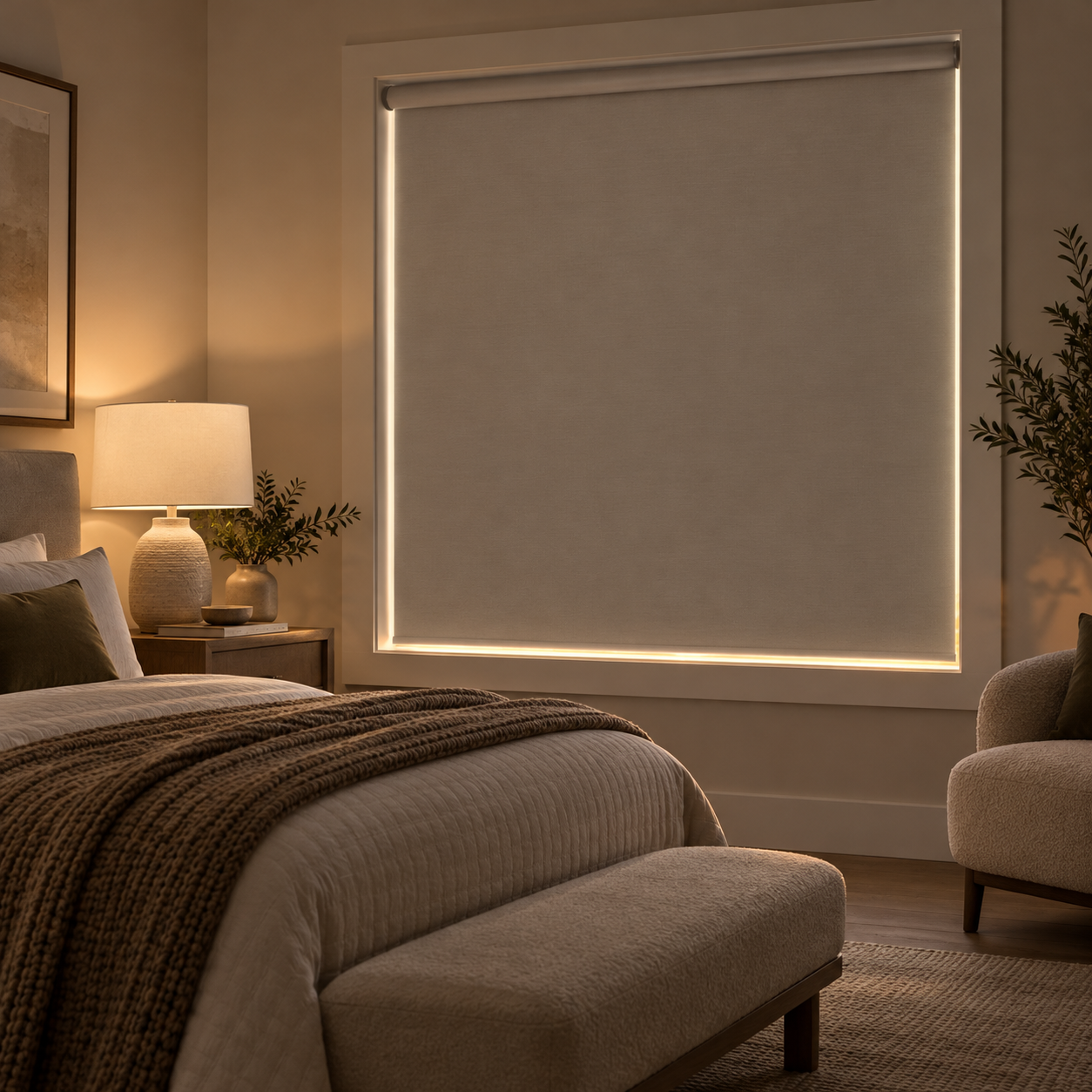
Close-up of opaque blackout roller shade fabric
A room made calmer.
Blackout fabric is made to block nearly all light passing through the material. It also prevents a view through the fabric, making it a strong choice when daytime sleep, screen viewing, or privacy is the priority.
- Light
- Blocks nearly all light through the fabric.
- Privacy
- Excellent privacy through the fabric, day and night.
- Best for
- Bedrooms, nurseries, media rooms, and hospitality spaces.
Important: Blackout fabric alone does not guarantee a completely dark room. Light can enter around the sides or top; overlapping mounts and optional side channels can help reduce gaps.
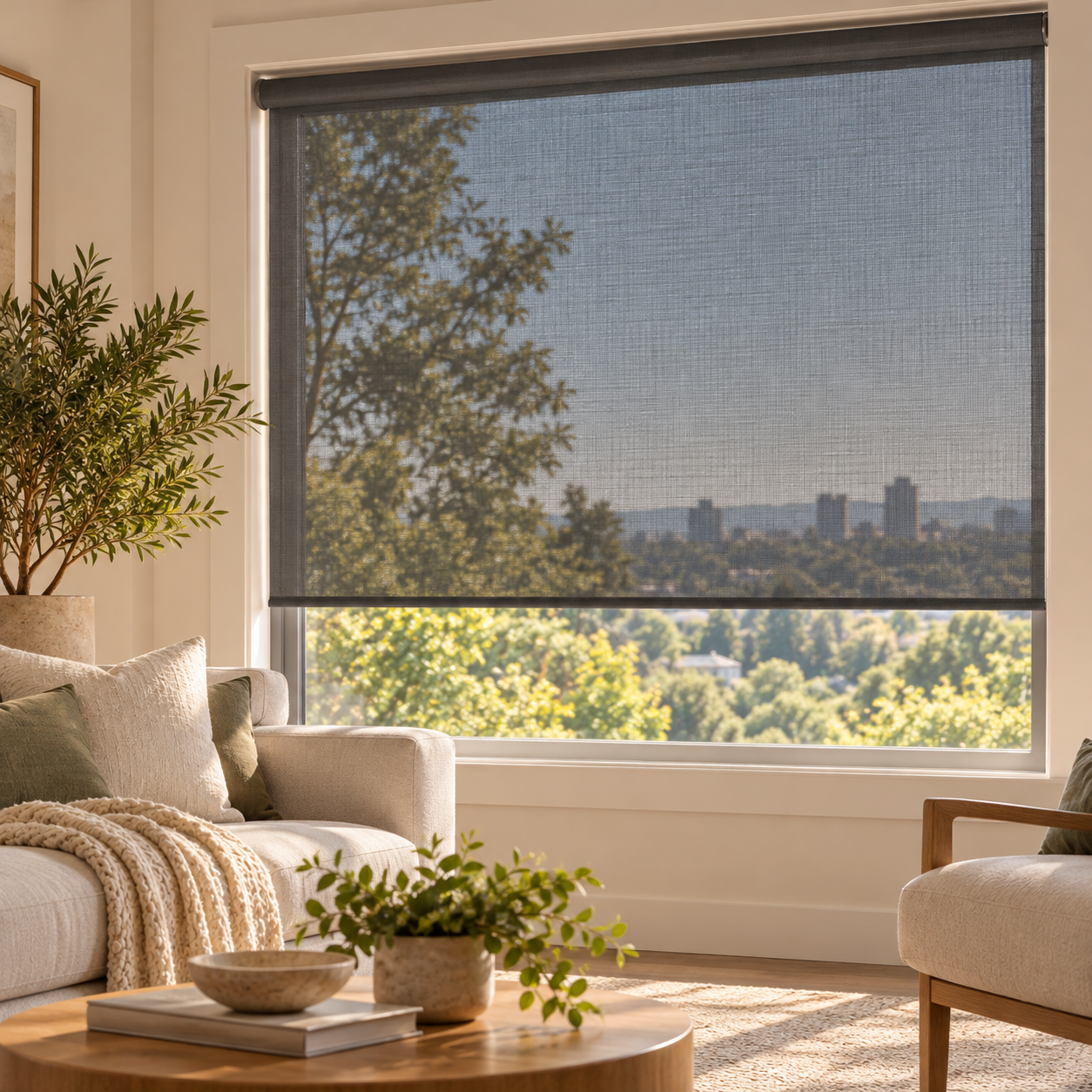
Close-up of the open weave of a solar screen fabric
Keep the view. Tame the sun.
Also called Sunscreen or Solar Shades, screen fabrics have a precisely woven pattern of small openings. They reduce glare and help manage solar exposure while letting you enjoy an outward view in daylight.
- Light
- Varies with fabric color and openness percentage.
- Privacy
- Some daytime privacy; low nighttime privacy with interior lights on.
- Best for
- View windows, offices, sunrooms, and commercial spaces.
Remember: Solar Screen is not a nighttime privacy fabric. After dark, illuminated interiors can be visible from outside. Consider layering if privacy is essential.
What changes after sunset?
Daytime appearance is only half the story. Once the lights turn on indoors, the brighter side of the glass changes — and so can your privacy. Compare the same fabric under both conditions.
Light Filtering
Soft glow / Partial nighttime privacy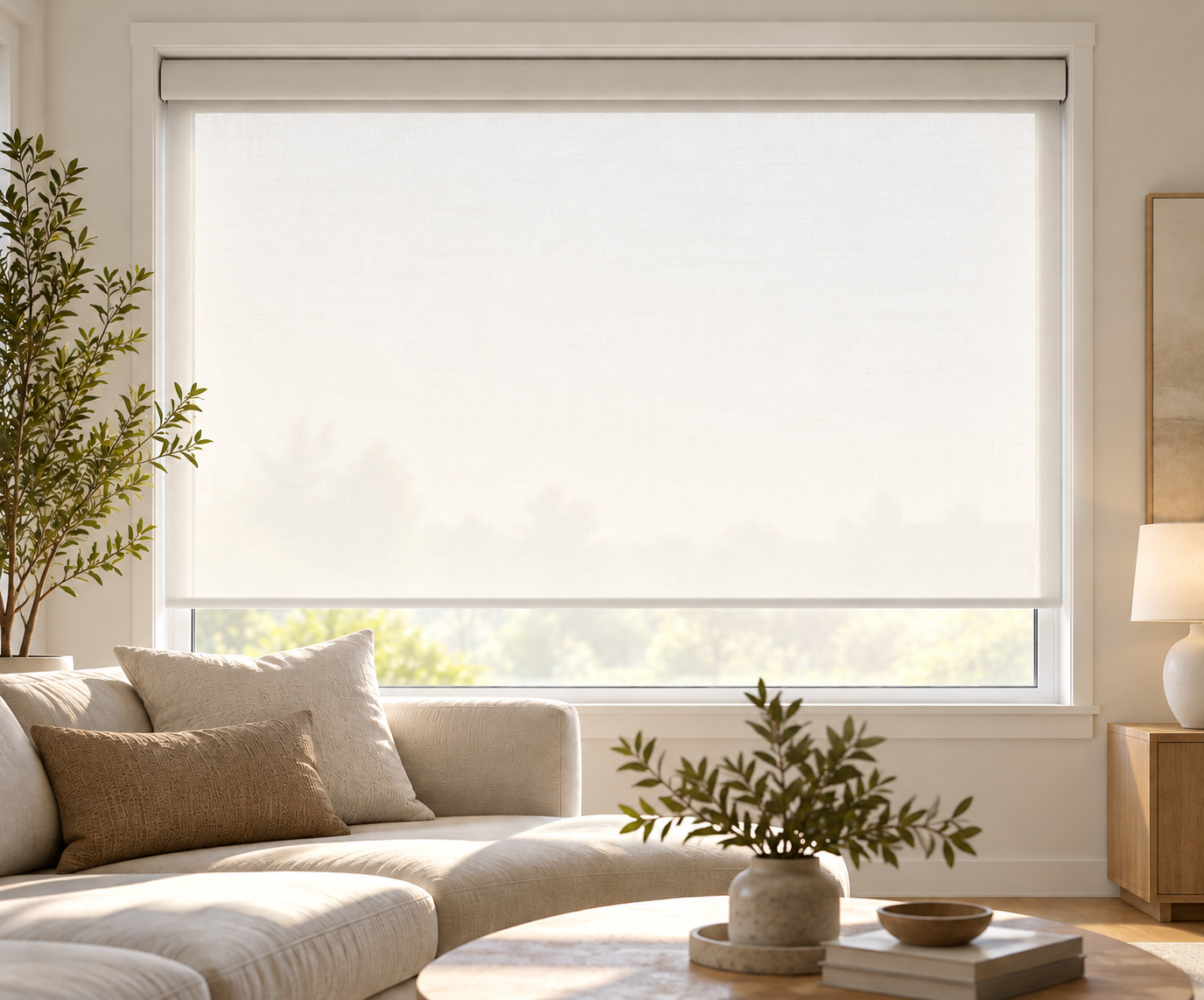
Soft, even daylight. The outdoor scene is obscured, with comfortable daytime privacy.
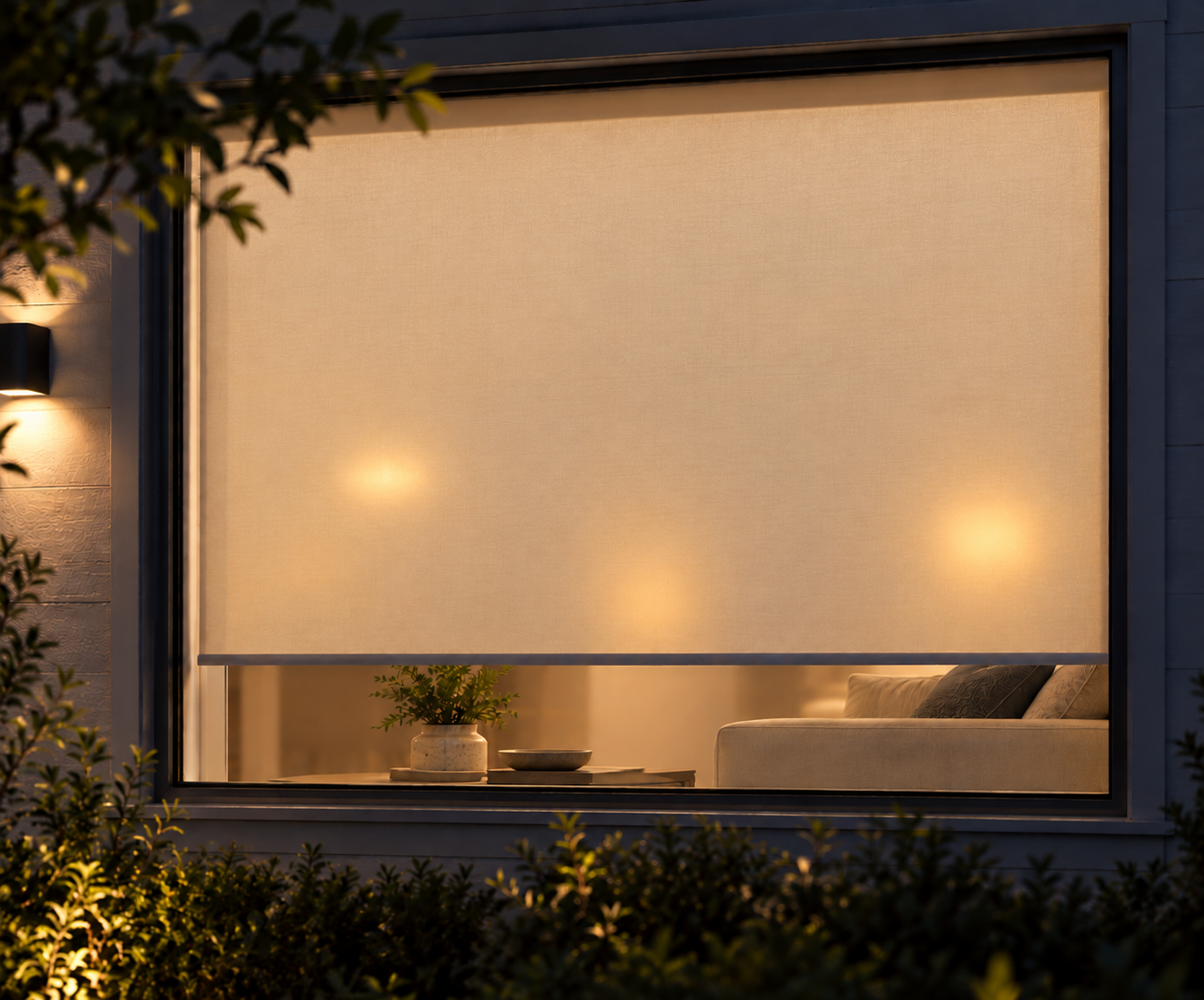
With the lights on indoors, the shade glows warmly from the street. General shapes and silhouettes are partly visible through lighter weaves — softer than a bare window, but not full privacy.
Blackout
Opaque / High privacy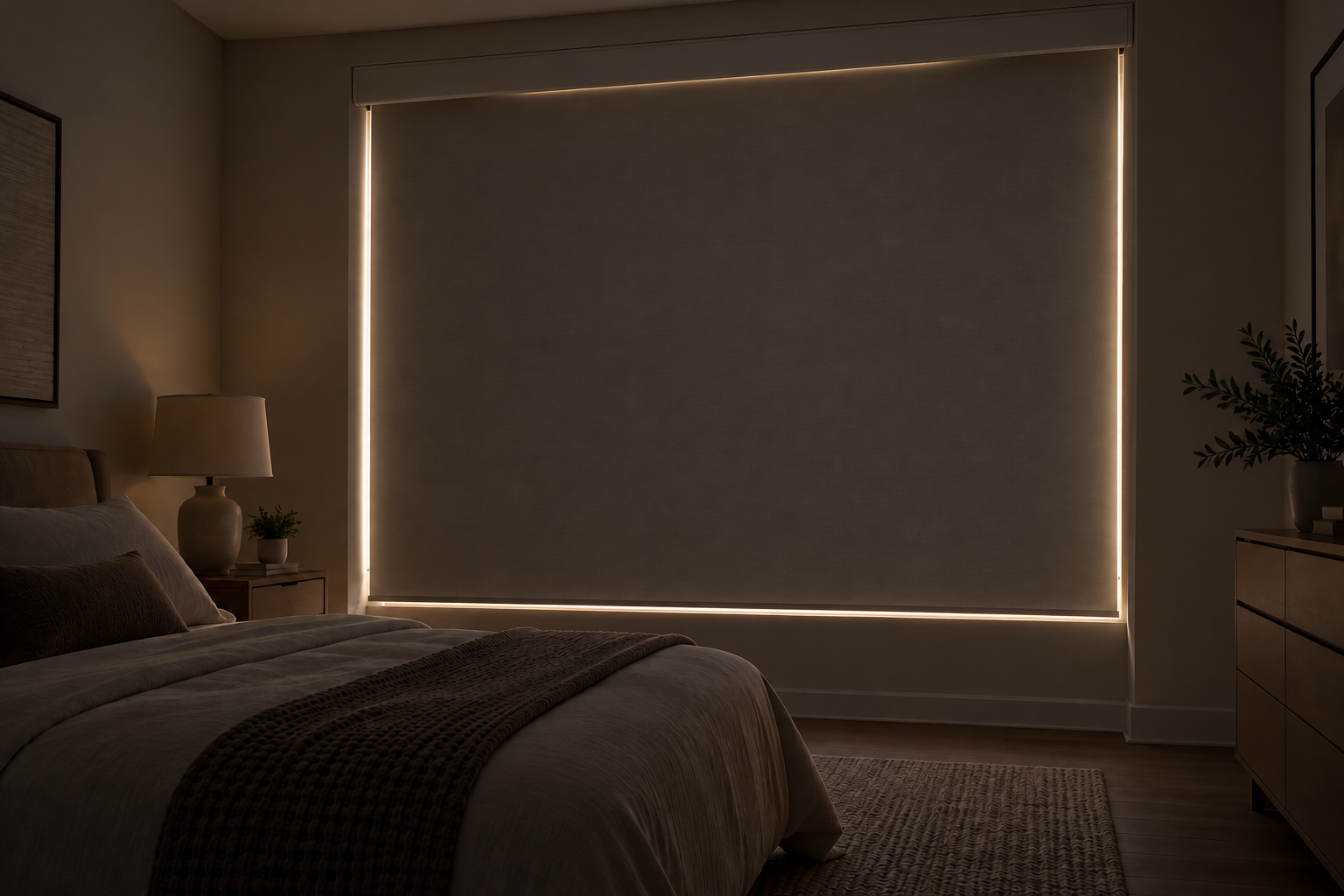
Light does not pass through the opaque fabric itself. But a roller shade's fabric is deducted narrower than the window, so daylight still seeps in along both sides where the fabric ends.
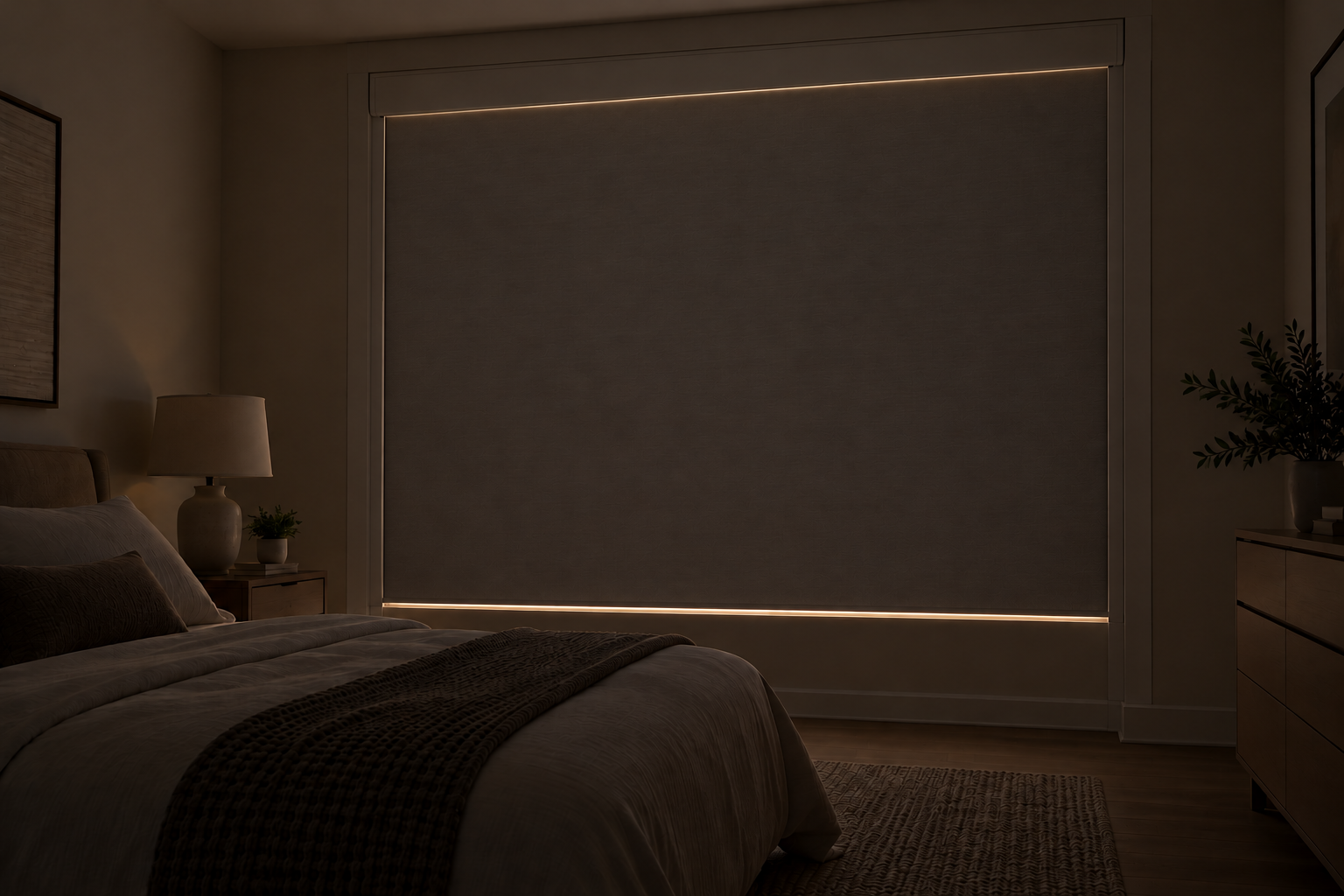
For the darkest possible room, add side channels. The fabric's edges ride inside tracks along both sides of the window, so the daylight that normally seeps in at the edges is captured and the room sits noticeably darker. A thin line of light can still show at the top and bottom rail.
Solar Screen (3% example)
Daytime view / Nighttime exposure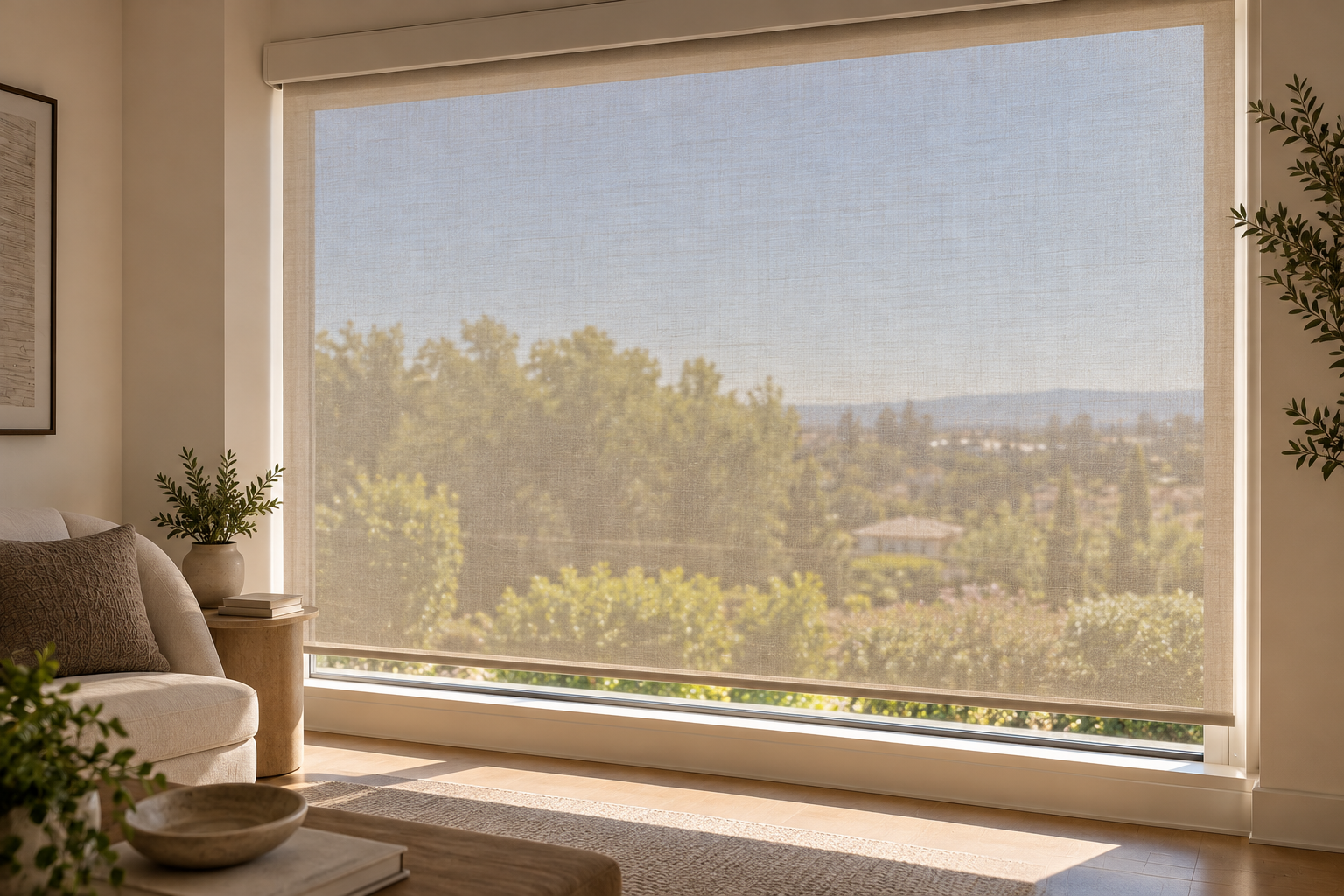
An outward view remains available with reduced glare. Visibility from outside is typically limited in bright daylight.
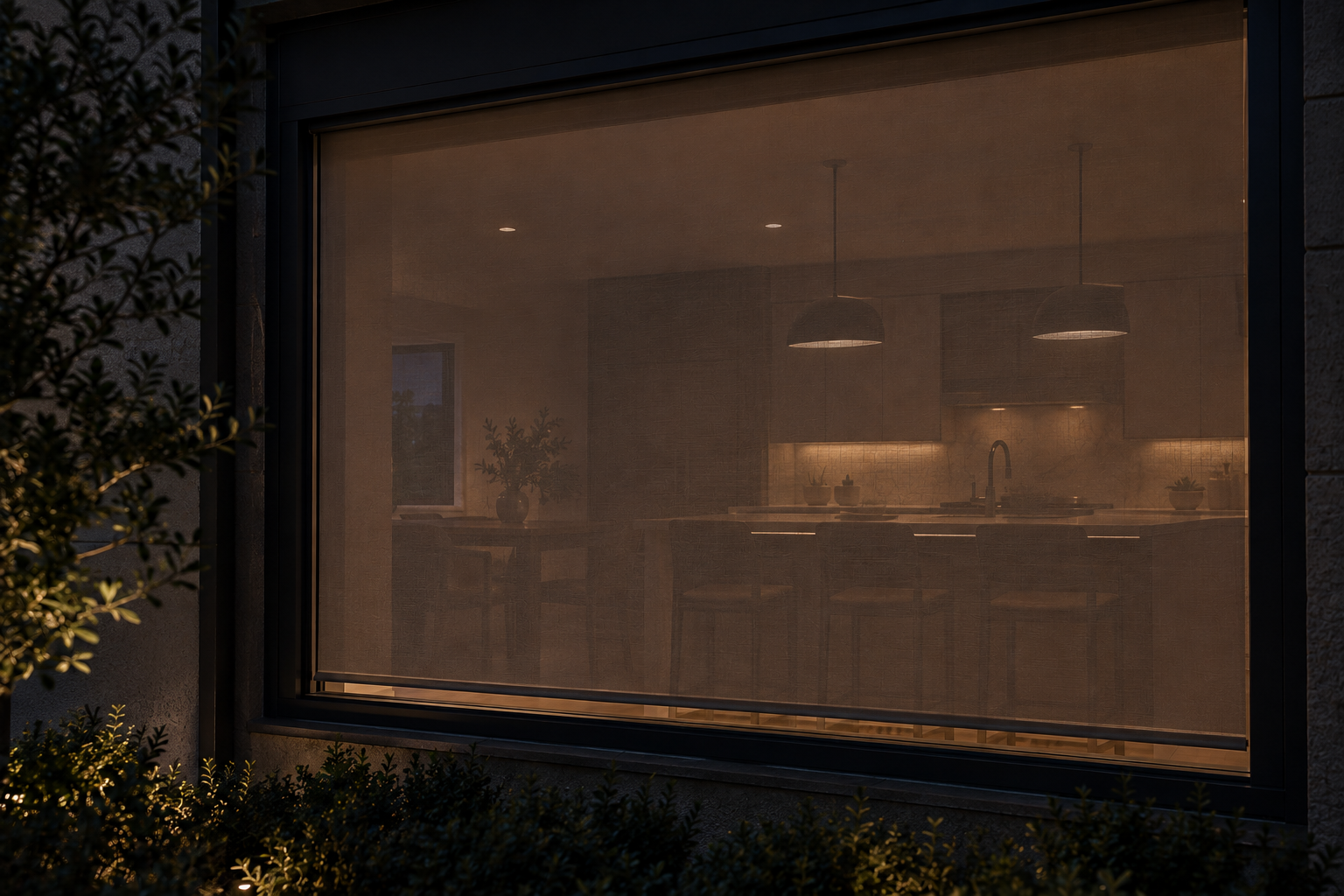
After dark the effect reverses. With the interior lights on, the open weave shows the room to anyone standing outside — furniture, lamps and movement read straight through the shade. Solar Screen is a daytime fabric; for evening privacy, layer it with a Light Filtering or Blackout shade.
A small percentage makes a big difference.
Solar Screen openness describes approximately how much of the fabric is open space between yarns. Lower percentages mean a tighter weave; higher percentages let more of the view and daylight pass through.
Lower openness
More screening and daytime privacy
Higher openness
Clearer view and more daylight
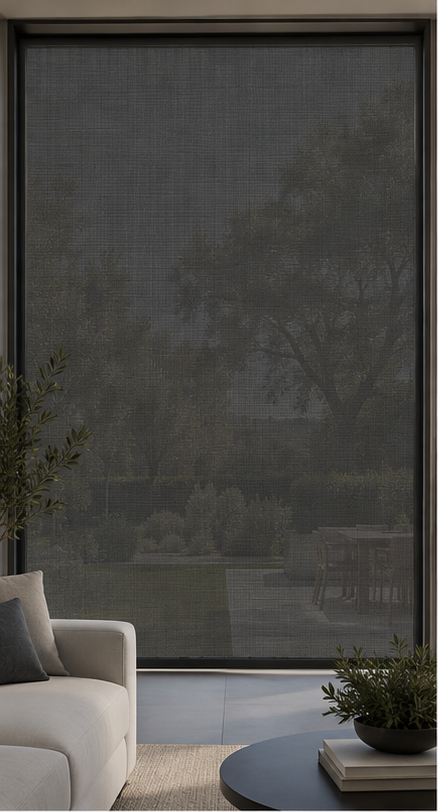
Maximum screening, minimal view
Very small openings give stronger glare and solar screening with higher daytime privacy, but a more restricted view. A good starting point for very sunny exposures.
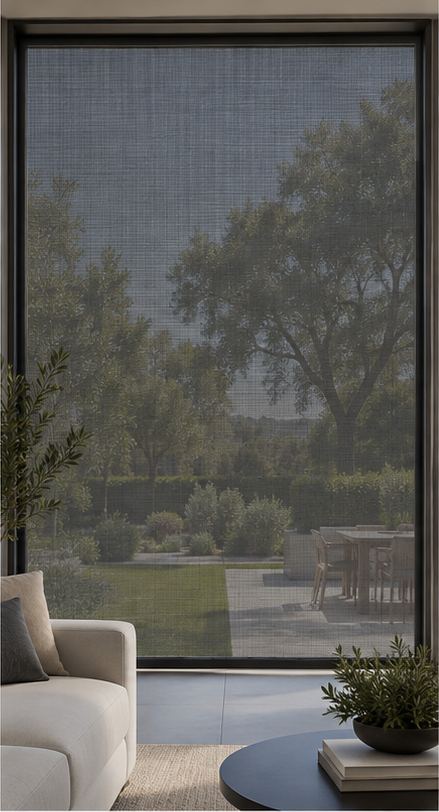
Strong screening, usable view
A popular middle ground: good glare control, helpful daytime privacy, and an outside view that is clearer than with 1% openness.
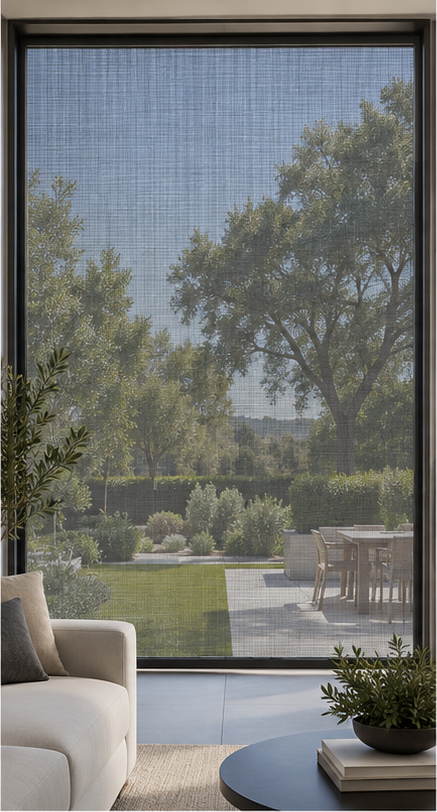
A comfortable everyday view
Brings in more natural light and opens up the view, with moderate sun screening and more limited daytime privacy. Often suited to homes and offices.
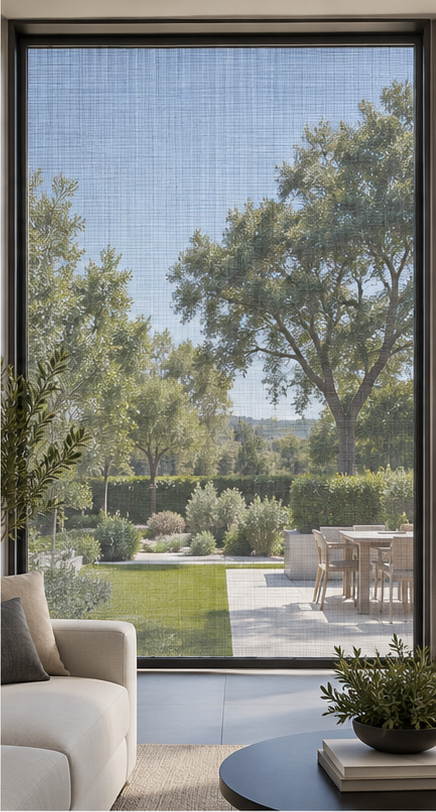
The view takes priority
Larger openings allow more daylight and the clearest view, with less glare control and daytime privacy than tighter solar screens.
Openness is not a UV-blocking percentage. Actual UV reduction, glare, and heat performance depend on the specific fabric construction, color, glazing, and installation. Check each fabric's technical specifications rather than calculating UV protection from openness alone.
The right fabric for the right purpose.
Think about how you want the window to work, not just how the material looks. This chart summarizes the typical trade-offs between the three families.
| Feature | Light Filtering | Blackout | Solar Screen |
|---|---|---|---|
| Light control | Soft, diffused daylight | Blocks nearly all light through fabric | Varies by openness, color, and construction |
| Outside view | Generally obscured | Not visible | Visible; clearer with higher openness |
| Daytime privacy | Good | Excellent through the fabric | Variable; generally stronger with lower openness |
| Nighttime privacy | Silhouettes may show with lights on | Excellent through the fabric | Limited when indoor lights are on |
| Glare control | Softens harsh daylight | Strong light blocking | Designed to reduce glare; varies by openness |
| Heat / UV reduction | Varies; often moderate | Can be substantial; depends on system and window | Designed to manage solar heat and UV; check fabric ratings |
| Best applications | Living rooms, kitchens, dining areas | Bedrooms, nurseries, media rooms | View windows, offices, commercial spaces |
General guidance only. Actual results vary by fabric, window orientation, ambient lighting, and installation details. Privacy descriptions refer to looking through the shade material, not gaps around it.
Start with your priority.
If you're unsure which sample to pull first, let the room's most important need lead the selection.
For soft, bright spaces
Choose Light Filtering.
When you want daylight to feel gentle, while obscuring a direct view from outside during the day.
For rest and darkness
Choose Blackout.
When you want the strongest light-blocking fabric. Discuss mounting gaps if deep darkness is important.
For sunny rooms with views
Choose Solar Screen.
When reducing glare without losing your daytime view matters most. Plan separately for nighttime privacy.